
Key Takeaways
Vehicle fluid systems
Modern cars rely on multiple separate fluid systems to lubricate moving parts, transfer heat, transmit force, and protect components from wear. Each fluid has a specific job, degrades over time, and needs to be checked and replaced on its own schedule. Neglecting any one of them can cause repairs that cost far more than the fluid itself.
Fluid degradation happens through oxidation, contamination, and heat cycling. Viscosity breakdown and additive depletion are the main failure modes, not just volume loss.
Engine oil: the fluid most drivers already know
Engine oil coats metal surfaces inside the engine to reduce friction and carry heat away from parts that would otherwise grind against each other at high speed. It also suspends contaminants and carries them to the oil filter. Over time, heat and combustion byproducts break down the oil's additive package, which is why it needs to be changed periodically rather than just topped off.
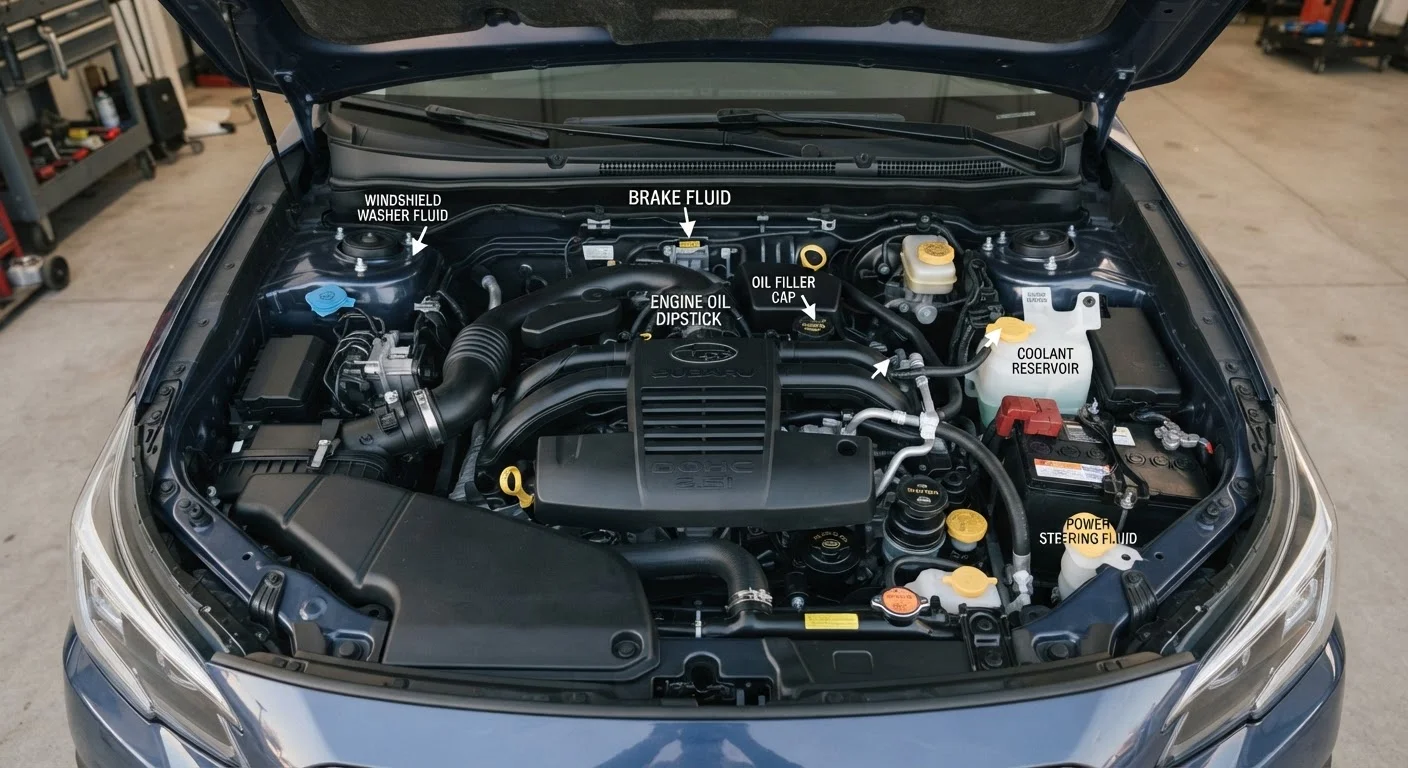
Check oil level with the dipstick when the engine is cold or at least five minutes after shutting it off. The oil should fall between the two marks on the dipstick and appear amber to dark brown. Black, gritty, or milky oil signals a problem worth discussing with a mechanic. For replacement intervals, the 3,000-mile rule is outdated; most modern vehicles go 5,000 to 10,000 miles between changes depending on oil type and driving conditions.
Coolant: preventing both overheating and freezing
Coolant (also called antifreeze) circulates through the engine and radiator to absorb combustion heat and release it through the radiator. The same mixture that prevents boiling in summer also lowers the freezing point of the water in the system, protecting the engine block in cold climates.
Check coolant level at the overflow reservoir (a translucent plastic tank near the radiator) when the engine is cold. Never open the radiator cap on a hot engine; pressurized coolant can cause serious burns. Most vehicles use a 50/50 mix of coolant concentrate and distilled water. Coolant degrades and becomes acidic over time, which corrodes metal components, so flushing every 30,000 miles or every two to five years (per your owner's manual) is worth budgeting for.
Always check coolant when the engine is cold
Opening a radiator cap or coolant reservoir cap on a hot engine releases pressurized steam that can cause burns. Wait at least 30 minutes after driving before inspecting coolant. The level in the overflow reservoir is the safe reference point for most vehicles.
Brake fluid: a safety-critical system
Brake fluid transmits the force from your brake pedal through the hydraulic lines to the brake calipers at each wheel. Without adequate, clean fluid, pedal feel degrades and stopping distances increase. Brake fluid is hygroscopic, meaning it pulls moisture from the air through brake hoses over time. That absorbed water lowers the fluid's boiling point, which can cause brake fade during repeated hard stops.
Check the brake fluid reservoir (a small capped container near the firewall on the driver's side) by looking at the level through the translucent plastic. It should sit between the MIN and MAX lines. A significantly low level may indicate a leak rather than normal consumption; a mechanic should inspect it promptly. Flushing the brake system is work best left to a qualified professional. Most manufacturers recommend a flush every two to three years.
Transmission fluid, power steering fluid, and washer fluid
Transmission fluid lubricates the gears and clutch packs inside the transmission while also acting as a hydraulic fluid in automatic transmissions. Degraded transmission fluid causes rough shifting, slipping, and eventually expensive internal damage. Many sealed automatic transmissions have no dipstick; consult your owner's manual to determine whether your vehicle has a serviceable fill point and what interval applies. Conventional wisdom once suggested 30,000-mile changes; many modern synthetics last 60,000 to 100,000 miles, but that depends heavily on vehicle design and driving habits.
Power steering fluid operates the hydraulic assist in conventional power steering systems. Vehicles with electric power steering have no fluid to check. If your car has hydraulic steering and you notice a whining sound when turning, check the reservoir level and look for leaks around the steering rack. Low fluid here often points to a slow leak rather than normal depletion.
Windshield washer fluid is straightforward but easy to overlook. Use a formulation rated for your climate; plain water freezes in cold weather and can crack the reservoir. A seasonal maintenance review is a practical moment to top this off along with the other fluids.
$4,000+
Average cost of engine replacement from neglect
According to AAA, engine repairs are among the costliest vehicle failures, often tracing back to missed oil or coolant maintenance.
5 min
Time needed for a full fluid visual check
Checking all six fluid systems on a typical passenger vehicle takes approximately five minutes with no tools required.
2-3 years
Recommended brake fluid flush interval
Most vehicle manufacturers recommend replacing brake fluid every two to three years due to moisture absorption, regardless of mileage.
How to make fluid checks a habit without spending extra time
The simplest system is to check fluids once a month, either at a gas fill-up or on a set calendar date. Engine oil and coolant level checks take about two minutes combined. Brake fluid, power steering fluid, and washer fluid can be checked in another two minutes. That five-minute habit can catch a slow leak or low level before it becomes a roadside problem or a shop bill.
Keep a small flashlight in the glove compartment; reservoir markings can be hard to read in a dim garage. If any fluid is consistently low between checks, that is a signal to look for a leak rather than simply top it off each time. For a broader picture of what to inspect before busy driving seasons, see the seasonal car maintenance checklist. Dashboard warning lights can also flag fluid pressure or temperature issues before you notice anything else; understanding those warning lights helps you respond appropriately.