

Automotive

Seasonal Car Maintenance: What to Check Before Every School Year

Share
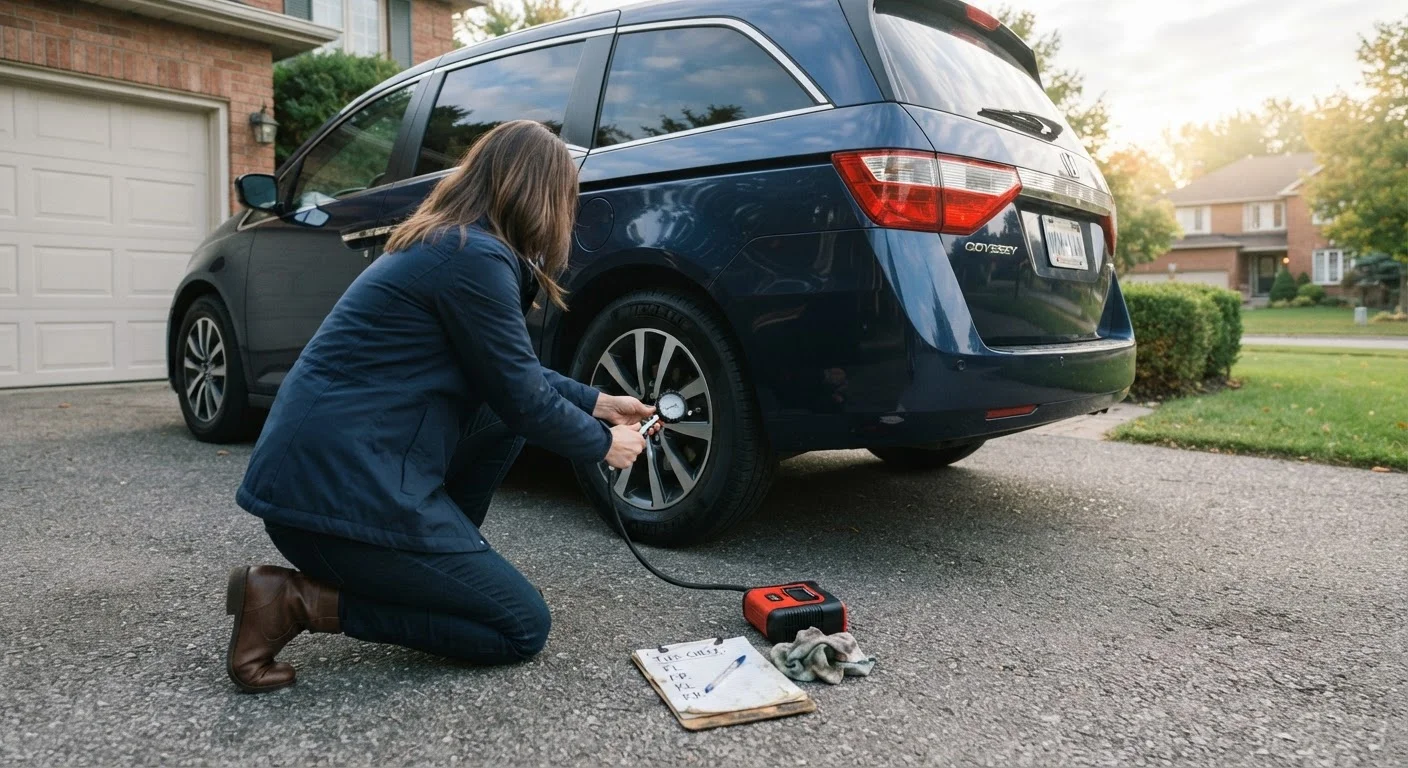
Parent checking tire pressure on a family minivan in a suburban driveway with a checklist nearby

Key Takeaways

Tires, brakes, and fluids are the three areas most likely to cause unexpected breakdowns during the school-year driving surge.
Many checks on this list require no tools and take under five minutes each.
Some tasks, such as brake inspection and battery load testing, should go to a qualified mechanic if you are not confident doing them yourself.
Running this checklist once a year, before school starts, can catch problems while they are still inexpensive to fix.
Keeping a basic emergency kit in the car costs little and provides a safety net for the whole family.
45–90 min

Summary

22 items · 45 to 90 minutes

Why back-to-school season is the right time for a car check

August and September bring a sharp rise in daily driving. Carpools, after-school activities, and weekend sports all add miles fast. A vehicle that coasted through summer road trips may still have worn wiper blades, low brake fluid, or tires that are quietly losing pressure. Running a structured check before the rush starts means you catch those problems on your schedule, not the side of the road.

This checklist is organized into four groups: tires and wheels, brakes and steering, fluids and filters, and safety gear. Each item is marked by priority so you can triage if time is short. For tasks involving brake hydraulics, electrical systems, or anything under the hood that you are not comfortable with, see our guide on which car jobs to hand off to a mechanic.

Tires and wheels

Check tire pressure on all four tires, including the spare, using a gauge when the tires are cold. Compare readings to the placard inside the driver's door jamb, not the number molded on the tire sidewall. Must
Inspect tread depth by inserting a quarter upside down into the main groove: if the top of Washington's head is visible, the tread is at or below 4/32 inch and replacement should be scheduled soon. Must
Look at the outer and inner edges of each tire for uneven wear patterns, which can signal an alignment or suspension problem rather than simple tread wear. Should
Check the spare tire's pressure and confirm you have the jack and lug wrench stored in the vehicle. Should
Inspect wheel lugs visually for rust or obvious looseness, especially if tires were recently rotated or swapped. Nice to have

Brakes and steering

Listen for squealing, grinding, or a pulsing sensation when braking during a slow test stop in a safe area; any of those signs warrants a professional inspection before continued daily use. Must
Have a mechanic measure brake pad thickness if the vehicle has logged more miles than the manufacturer's service interval or if you cannot inspect the pads visually through the wheel spokes. Must
Check brake fluid level in the translucent reservoir under the hood; a low level alongside worn pads is normal wear, but a low level with thick pads may indicate a leak. Must
Test the parking brake by engaging it on a gentle slope to confirm it holds the vehicle without rolling. Should
Turn the steering wheel slowly from lock to lock while stationary and listen for clicking or grinding sounds that could indicate a worn CV joint or power steering issue. Should

Fluids and filters

Check engine oil level and condition on the dipstick; dark, gritty oil past the change interval should be replaced rather than topped off. Must
Inspect the coolant reservoir level and look at the coolant color through the translucent tank; brown or rusty coolant suggests it needs to be flushed. Must
Top off windshield washer fluid with a solution appropriate for your region's lowest expected temperature. Must
Check the cabin air filter by removing it per your owner's manual; a filter visibly clogged with debris reduces HVAC performance and should be replaced, typically at 12,000 to 15,000 mile intervals. Should
Check transmission fluid level and color if your vehicle has a dipstick for it; dark or burnt-smelling fluid warrants a mechanic's evaluation. Should
Inspect the engine air filter; a dirty filter reduces fuel efficiency and is usually an inexpensive DIY replacement. Nice to have

Safety gear and visibility

Test all exterior lights including headlights, taillights, brake lights, turn signals, and reverse lights; walk around the vehicle while a second person operates the controls. Must
Replace wiper blades that streak, skip, or leave uncleared patches; most blades last six to twelve months in typical use. Must
Verify the emergency kit in the trunk contains a first-aid kit, jumper cables or a jump starter pack, a flashlight with working batteries, and a reflective triangle or flares. Should
Check that child safety seats are correctly installed and that harness straps fit properly after any summer growth spurts. Must
Confirm the vehicle registration, proof of insurance, and roadside assistance information are current and stored in the glove compartment. Should
Have the battery load-tested at a shop if the vehicle is three or more years old or has had slow starts; a failing battery often gives little warning before it goes dead. Nice to have

What you will need before you start

Most of these checks require only a flashlight, a tire pressure gauge, and your owner's manual. A few items, such as a battery load test or a brake pad measurement, call for a specific tool or a shop visit. Gather what you have, note what you do not, and plan a mechanic appointment for anything that falls outside your comfort level.

Required

Tire pressure gauge

Measures tire pressure accurately so you can match the manufacturer's recommended PSI.

Required

Flashlight

Illuminates brake pads through wheel spokes, undercarriage areas, and the engine bay.

Required

Owner's manual

Gives the correct fluid specifications, filter locations, and service intervals for your specific vehicle.

Required

Quarter (coin)

Used to perform a quick tread depth check on all four tires.

Optional

Fluid top-off supplies

Engine oil, coolant, and windshield washer fluid matched to your vehicle's specifications for topping off low reservoirs.

Optional

Battery load tester

Tests whether the battery can deliver adequate cranking power; typically available as a free service at auto parts stores.

If your vehicle has more than 100,000 miles on it, a few additional wear items deserve attention. Our article on keeping a high-mileage family car on the road longer covers those specifics in detail.

A note on fluids

Fluids are one of the fastest checks on this list and one of the most overlooked. Engine oil gets the most attention, but coolant, brake fluid, power steering fluid, and windshield washer fluid each affect daily safety and long-term engine health. If you want a plain-language explanation of what each one does and when it degrades, our companion article on understanding your car's fluids walks through all of them.

Never mix coolant types or top off with plain water

Different coolant formulations can react with each other and form deposits that damage seals and the water pump. Always use the coolant type specified in your owner's manual. In an emergency, distilled water is acceptable for a temporary top-off, but the system should be flushed and properly refilled as soon as possible.

Do not ignore the washer fluid reservoir. It sounds trivial, but a dirty windshield during a low-sun morning school drop-off is a genuine visibility hazard. Top it off with a solution rated for your climate.

Budgeting for what the checklist finds

Running this inspection does not mean you will spend money. Many items, such as checking tire pressure, topping off fluids, and testing lights, cost nothing or very little. When the checklist does surface a real problem, catching it early almost always lowers the repair cost. A set of worn wiper blades typically costs $20 to $40. Waiting until they fail in a rainstorm may not cost more in parts, but it adds risk.

If the inspection turns up several issues at once, prioritize by safety: brakes and tires first, convenience items last. A mechanic can help you sequence the work over a few pay periods if needed. For a broader look at keeping household finances in order, the annual family finance checkup covers how to budget for recurring maintenance alongside other household expenses.

This article provides general vehicle maintenance guidance for informational purposes only. It is not a substitute for advice from a qualified mechanic. Always consult a licensed professional for repairs involving safety-critical systems such as brakes, steering, and tires.

Automotive Editorial Team is the collective byline for our editorial team and contributor network. Articles published under this byline or an editorial pen name are researched, written, and reviewed according to our editorial standards for clarity, consistency, and independence before publication.

View all articles by Automotive Editorial Team →
Disclaimer: The content provided on our blog site traverses numerous categories, offering readers valuable and practical information. Readers can use the editorial team’s research and data to gain more insights into their topics of interest. However, they are requested not to treat the articles as conclusive. The website team cannot be held responsible for differences in data or inaccuracies found across other platforms. Please also note that the site might also miss out on various schemes and offers available that the readers may find more beneficial than the ones we cover.