

Key Takeaways
Option A
DIY car maintenance
The hands-on, cost-saving approach for routine tasks.
Best for: Owners comfortable with basic tools who want to reduce labor costs on low-risk, well-documented jobs.
Option B
Professional mechanic
The trained, equipped option for complex or safety-critical repairs.
Best for: Repairs involving brakes, suspension, electrical systems, or anything where an error could compromise vehicle safety.
If you want to cut routine maintenance costs
DIY car maintenance
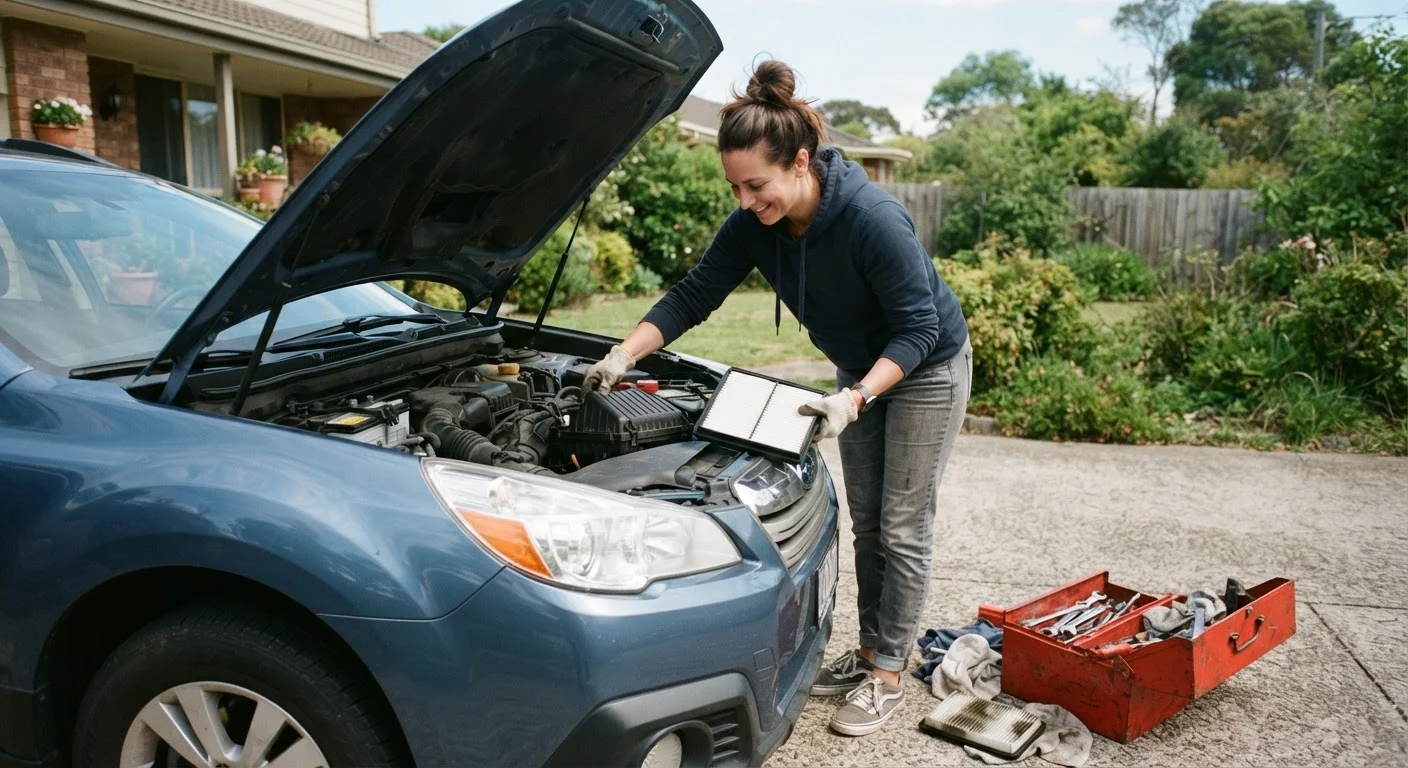
Oil changes, cabin air filter swaps, and wiper blade replacements carry low risk and are well-documented in owner manuals. Labor savings on these tasks add up meaningfully over a year.
If the job involves brakes, suspension, or steering
Professional mechanic
These systems directly affect vehicle control. An error in brake pad installation or a wheel bearing replacement can create dangerous driving conditions.
If your vehicle is still under warranty
Professional mechanic
Certain DIY repairs or the use of non-approved parts may affect warranty coverage. A licensed shop can document work in ways that protect your claim.
If you are dealing with electrical or transmission problems
Professional mechanic
Modern vehicle electronics require diagnostic equipment that most home mechanics do not own. Misdiagnosis often leads to replacing parts that were not the actual cause.
Where the cost split actually comes from
When a shop gives you a repair estimate, labor is usually the largest line item. Depending on the job and region, labor can account for 50 to 80 percent of the total bill. That math is why DIY appeals to budget-conscious families: if the parts cost $30 and the shop charges $120, most of that gap is time, not materials.
The calculation only works, though, when the task is genuinely within reach of someone without specialized training. A straightforward oil change on a typical sedan takes about 30 minutes and requires a drain pan, a wrench, and the correct filter. A timing belt replacement on an interference engine takes several hours, requires precise torque specs, and can cause catastrophic engine damage if the belt is installed one tooth off. These are not the same category of job.
Understanding how shops price labor and parts helps families decide whether a quote is reasonable or whether a second opinion makes sense.
| Criterion | DIY car maintenance | Professional mechanic |
|---|---|---|
| Labor cost | None (your time only) | $80 to $150+ per hour typical |
| Tools required | Basic hand tools for simple jobs | Full shop equipment, lifts, diagnostics |
| Suitable job types | Filters, wipers, oil changes, bulbs | Brakes, suspension, electrical, transmission |
| Error consequences | Low on routine tasks | Accountable; workmanship warranty common |
| Warranty impact | Possible risk if unapproved parts used | Documented repair protects coverage |
| Diagnostic capability | Limited to visible or basic checks | Manufacturer-level scan tools available |
Jobs that most owners can handle at home
Several maintenance items are designed to be owner-serviceable and are covered step by step in every vehicle's owner manual. These include oil and filter changes (for owners comfortable working under a vehicle), engine air filter replacements, cabin air filter replacements, wiper blade swaps, battery terminal cleaning, tire pressure checks, and light bulb replacements on vehicles with accessible housings.
The common thread is that these tasks have a low consequence of error, do not require vehicle-specific specialty tools, and are clearly documented by the manufacturer. Checking and topping off fluids such as coolant and windshield washer fluid also falls here, though adding brake fluid or transmission fluid without understanding why the level dropped can mask a more serious problem.
Before starting any task, confirm the correct parts and specs in your owner manual or a reputable vehicle-specific repair database. Using the wrong oil viscosity or a mismatched filter is a common and avoidable mistake.
Jobs that belong in a professional shop
Any repair that directly affects vehicle control or occupant safety warrants a licensed mechanic. Brake system work (pads, rotors, calipers, brake lines) sits at the top of that list. So does suspension and steering work: worn ball joints, tie rods, or struts affect handling in ways that may not be obvious until a high-speed maneuver or emergency stop.
Transmission repairs, whether automatic or manual, require disassembly in a clean environment with precise measurements. Electrical diagnosis on modern vehicles needs scan tools that read manufacturer-specific fault codes, not just generic OBD-II readers. Airbag system work is regulated and can cause serious injury if handled incorrectly.
Delaying professional repairs on safety systems tends to increase the final bill. A worn caliper that is left too long can score a rotor that would otherwise have been fine, turning a $80 job into a $350 one.
If a DIY attempt on a complex job goes wrong, the repair cost at that point is higher because a mechanic must first undo the incomplete work before fixing the original problem. That is a real risk worth pricing into any decision.
A practical framework for the decision
Three questions help sort most jobs into the right category. First: is this task covered in the owner manual as an owner-serviceable item? If yes, it is worth researching further. Second: what is the consequence of an error? If a mistake means a fluid leak, it is serious but correctable; if it means brake failure, that is a different calculation entirely. Third: do you have the correct tools and a safe workspace? Some jobs require a vehicle lift, torque wrenches calibrated to spec, or specialty sockets that most households do not own.
Running through a seasonal maintenance checklist is a good way to identify the routine items that can be DIY-handled before they become larger problems. Catching a worn wiper blade or a low tire in the driveway is the lowest-cost outcome possible.
For anything outside that routine category, getting at least one written estimate from a licensed shop gives you a baseline. Quotes vary between shops for legitimate reasons, and a second estimate on a large job is a standard consumer practice, not an insult to the first shop.