

| Red warning light | Stop or act immediately |
| Yellow/amber warning light | Schedule service soon |
| Green/blue indicator | Informational, system is active |
| OBD-II standard adopted | Required on all US vehicles since 1996 (US EPA OBD-II mandate) |
| TPMS federally required | All new US passenger vehicles since 2008 (NHTSA TPMS rule) |
| Typical diagnostic scan fee | $50 to $150 at most US shops |
How to read warning lights at a glance
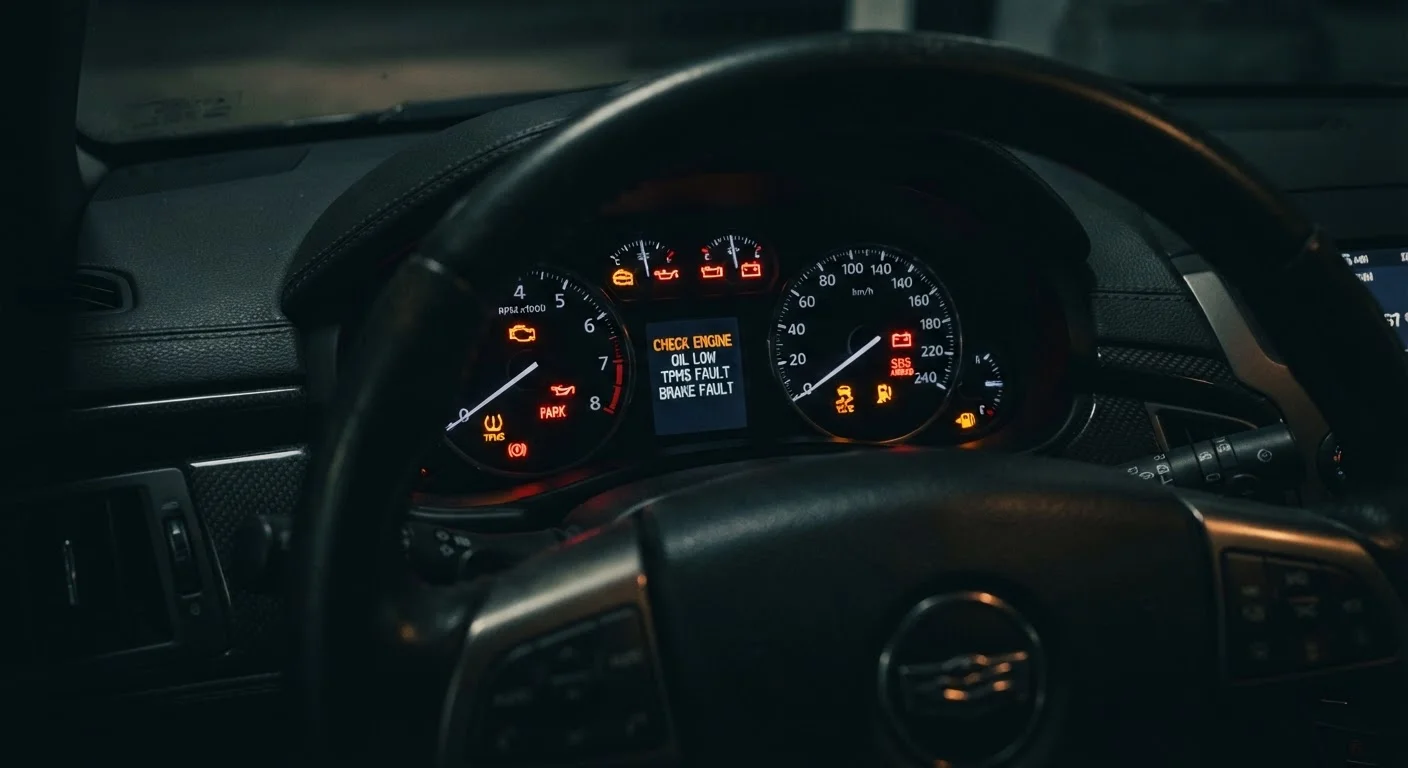
Most vehicles follow a consistent color system for warning lights. Red means stop or act immediately. Yellow or amber means investigate soon. Green and blue are informational, confirming something is active rather than wrong. This color logic applies broadly across domestic and import vehicles sold in the US, though icon shapes can differ by manufacturer.
| Red warning light | Stop or act immediately |
| Yellow/amber warning light | Schedule service soon |
| Green/blue indicator | Informational, system is active |
| OBD-II standard adopted | Required on all US vehicles since 1996 (US EPA OBD-II mandate) |
| TPMS federally required | All new US passenger vehicles since 2008 (NHTSA TPMS rule) |
| Typical diagnostic scan fee | $50 to $150 at most US shops |
When a light appears, resist the urge to assume it will go away on its own. Some warnings are triggered by a temporary sensor glitch, but others signal a problem that worsens with every mile driven. The sections below break down the lights families are most likely to encounter, grouped by urgency.
Lights that demand immediate action
These red indicators should prompt you to pull over safely as soon as possible or avoid driving until the vehicle is inspected.
- Oil pressure warning (oil can icon): Engine oil pressure has dropped to a dangerous level. Driving without adequate oil pressure can destroy an engine within minutes. Check the oil level immediately. If oil is full and the light stays on, the vehicle needs a mechanic before another trip.
- Engine temperature warning (thermometer in liquid icon): The engine is overheating. Shut off the AC, turn on the heater to help pull heat away from the engine, and find a safe place to stop. Continuing to drive risks warping the cylinder head, a repair that can run $1,000 or more.
- Battery warning (battery icon): The charging system is not maintaining voltage. The vehicle may be running on battery reserve only, meaning it could stall without warning. Avoid running non-essential accessories and get to a shop or auto parts store for a charging system test.
- Brake warning (exclamation point inside circle with parentheses): If the parking brake is disengaged and this light is still on, brake fluid may be low or a brake system failure may be present. Do not ignore this one.
For context on why brake fluid level matters alongside oil and coolant, see our guide to vehicle fluids.
Lights that need attention within days
Amber or yellow warnings are not emergencies in most cases, but they should not sit ignored for weeks either.
- Check engine light (engine outline icon): This is the most misunderstood light on any dashboard. It can indicate anything from a loose gas cap to a failing catalytic converter. An OBD-II code reader, available at auto parts stores for loan or purchase, retrieves the specific fault code so you know what you are actually dealing with before paying a diagnostic fee.
- Tire pressure warning (TPMS, cross-section of tire with exclamation point): One or more tires are below the recommended pressure. Underinflated tires reduce fuel economy and wear faster. Check pressure at a gas station and inflate to the PSI listed on the sticker inside the driver door jamb, not the number molded into the tire sidewall.
- Traction control or stability control warning: A steady light means the system has been manually turned off or has a fault. A flashing light while driving means the system is actively working to prevent a skid, which is normal on slippery roads.
- Transmission temperature warning: The transmission is running hotter than normal, often from towing, stop-and-go traffic, or low fluid. Ease off the load and have the fluid level checked.
OBD-II
On-Board Diagnostics II is a standardized system built into all US vehicles sold after 1996. It monitors engine and emissions components and stores fault codes that describe detected problems.
TPMS
Tire Pressure Monitoring System is a sensor network that alerts the driver when one or more tires drop significantly below the recommended inflation pressure.
Fault code
A numeric or alphanumeric code stored by the OBD-II system when a sensor detects an out-of-range reading. Mechanics use these codes to identify the source of a warning light.
Charging system
The alternator, battery, and associated wiring that keep a vehicle's electrical system powered while the engine runs. A failure in this system triggers the battery warning light.
Common mistakes that cost families money
Ignoring an amber check engine light for months is one of the most common ways a small repair becomes a large one. A misfiring cylinder, for example, can damage an oxygen sensor or catalytic converter if left unaddressed. Catalytic converter replacement can run $900 to $2,500 depending on the vehicle, compared to a spark plug service that typically costs well under $200.
Another expensive habit is clearing a warning light with a code reader without fixing the underlying problem. The code stores valuable diagnostic data. Erasing it before a mechanic sees the vehicle removes information that speeds up diagnosis and lowers labor time.
Some drivers assume any light that does not cause an obvious driving problem can wait until the next oil change. That works for reminders like a service maintenance alert, but not for a slow brake fluid leak or a failing wheel speed sensor that feeds the ABS system.
If you are unsure whether a specific light falls into the act-now or schedule-soon category, the owner manual for your vehicle lists every icon with a description. Most manuals are also available as free PDF downloads from the manufacturer's website if the paper copy is missing from the glovebox.