

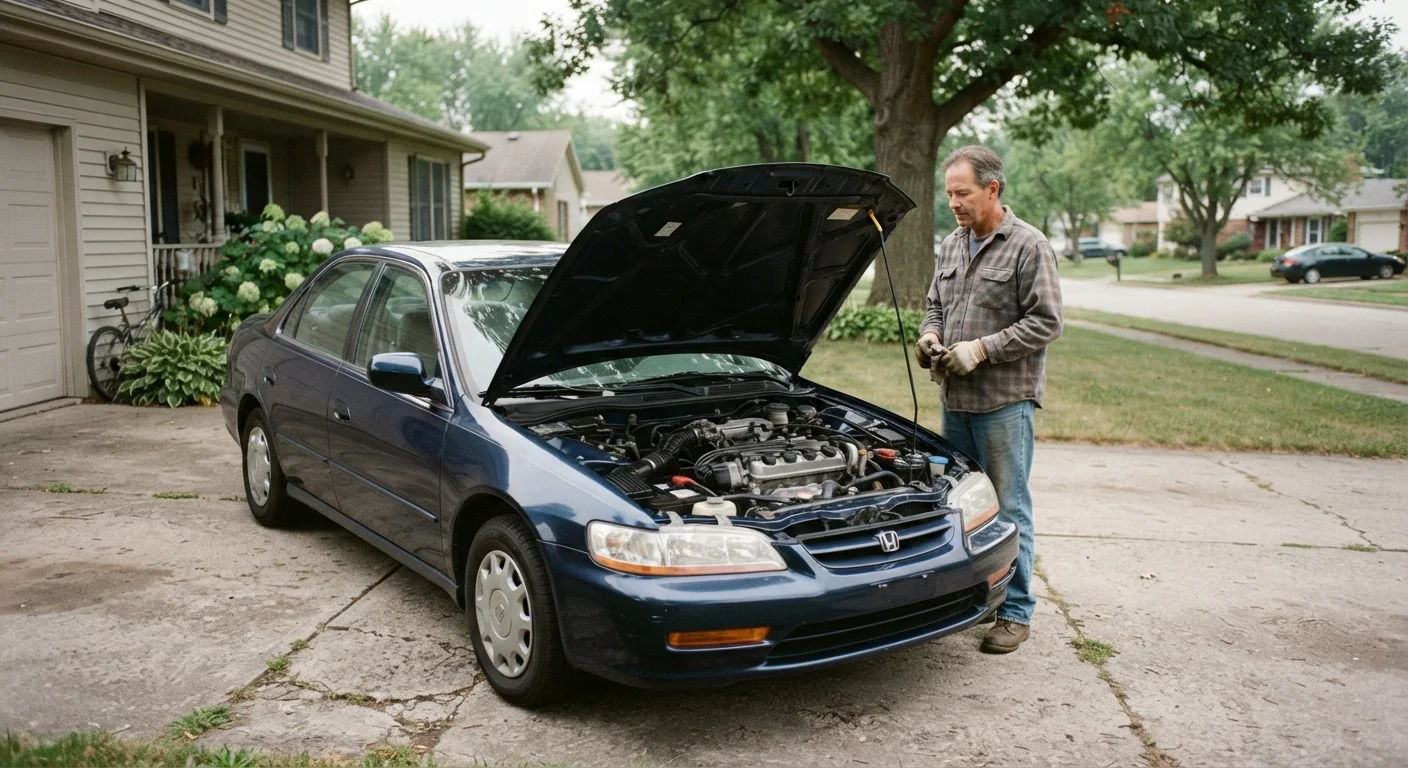
Key Takeaways
Why high-mileage cars can still be a smart choice
A car crosses 100,000 miles and many families start wondering whether to hold on or trade it in. For most households, keeping a paid-off vehicle running is almost always less expensive than taking on a new monthly payment, provided the car gets the right care. The average new vehicle payment in the US exceeds $700 per month, while a solid year of maintenance on an older car rarely approaches that figure.
What changes after 100,000 miles is not the car's fundamental reliability. It is the type of attention the car needs. Rubber components age, fluids break down more thoroughly, and small issues compound faster if ignored. Families who treat a high-mileage vehicle the same way they treated it at 40,000 miles often find themselves facing avoidable repairs.
The practices below are grounded in the kind of maintenance that keeps older vehicles on the road without requiring specialty tools or a large budget. Many of them apply at any mileage, but they become especially cost-effective once a car passes six figures on the odometer.
Core maintenance practices for older vehicles
Consistent maintenance is what separates a car that reaches 200,000 miles from one that strands a family at the side of the road at 130,000. The practices below cover the areas most likely to cause serious problems on high-mileage vehicles.
Follow the manufacturer's maintenance schedule, not habit or rumor.
Many families default to rules of thumb, like changing oil every 3,000 miles, that no longer apply to modern engines. Your owner's manual specifies intervals based on actual engineering data for your vehicle, which means following it avoids both under-maintenance and unnecessary spending.
Switch to a high-mileage motor oil formulation after 75,000 miles.
High-mileage oils contain seal conditioners and additional detergents that address the specific wear patterns in older engines. They can slow oil consumption and reduce the chance of leaks from degraded gaskets.
Flush and refill the cooling system on the schedule your manual recommends.
Coolant degrades over time and becomes acidic, which corrodes hoses, the radiator, and the water pump from the inside. On a high-mileage vehicle, a cooling system failure can quickly turn into a warped cylinder head, one of the most expensive engine repairs possible.
Inspect rubber components, including belts and hoses, every 12 months.
Rubber degrades with age and heat cycles regardless of mileage. A timing belt or serpentine belt that snaps while driving can cause engine damage that costs thousands to repair, while a proactive replacement typically costs a fraction of that.
Address small leaks and warning lights immediately rather than monitoring them.
Deferred repairs on a high-mileage car compound quickly. A slow power steering fluid leak or a minor exhaust leak rarely stays minor. Fixing them early limits damage and keeps repair costs predictable. Delaying small fixes consistently leads to larger bills.
Keep tires properly inflated and check tread depth at every oil change.
Correct tire pressure reduces uneven wear, maintains fuel economy, and affects braking distance, which is a safety factor that matters more on an older vehicle that may already have longer stopping distances. Low tread depth on one axle also strains the drivetrain on all-wheel-drive vehicles.
For families planning longer trips in an older vehicle, doing a maintenance check before you leave is especially important. See road trip planning on a tight budget for a broader look at keeping travel costs manageable.
Starting today: quick actions that take less than 10 minutes
Most families already know they should maintain their car. The gap is usually between knowing and doing. These steps require no mechanical skill and no appointment.
A seasonal approach to these checks is also useful. Running through a pre-school-year checklist gives families a built-in reminder to catch issues before heavier driving periods begin.
When a repair costs more than the car
At some point, a major repair estimate may exceed a vehicle's market value. That calculation is different for every family. A car that is paid off and mostly reliable still costs far less per month than a new payment, even if it needs occasional repairs. Factor in your full ownership cost, not just the repair quote, before deciding to walk away.