

Key Takeaways
Mulch, compost, and ground cover
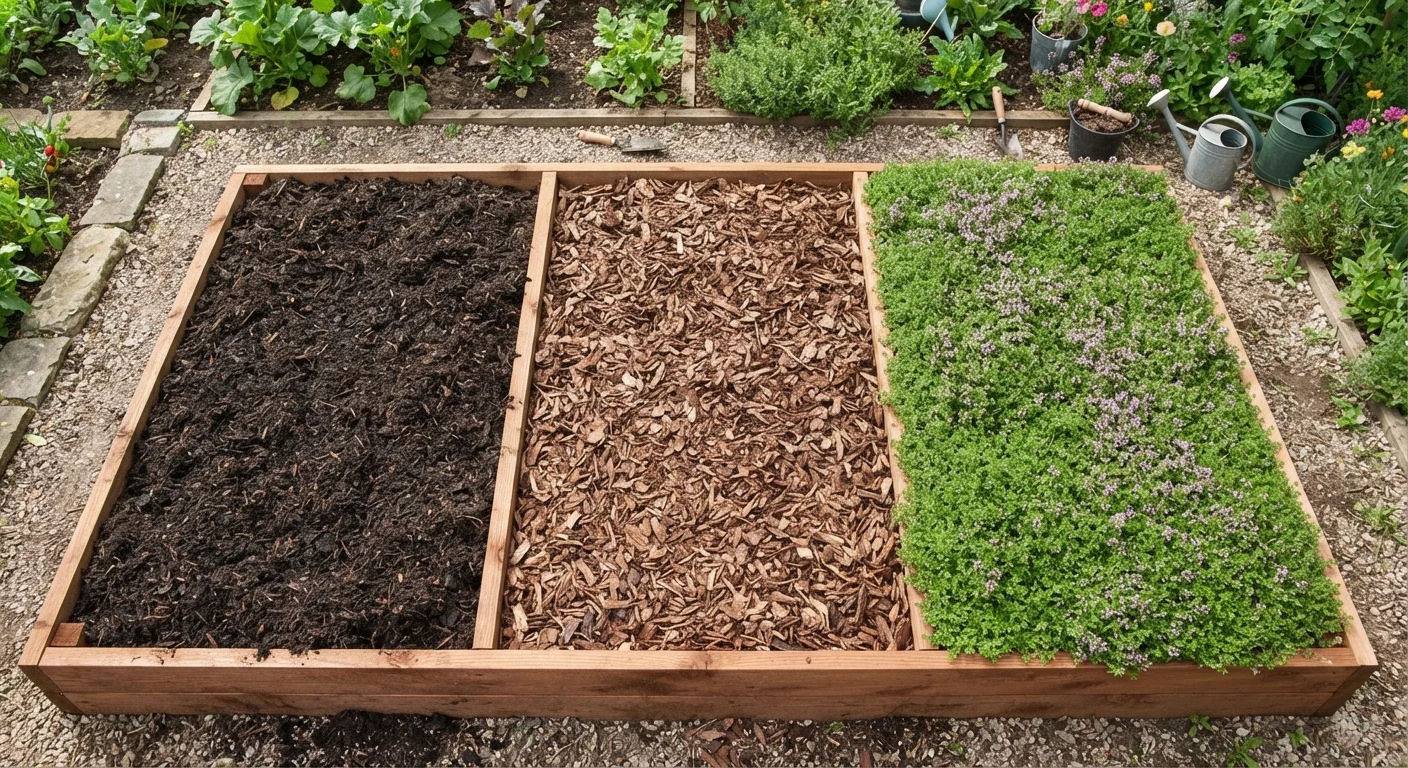
Mulch is a protective layer placed on top of soil to hold moisture and suppress weeds. Compost is decomposed organic matter mixed into soil to feed plants. Ground cover is living plants or non-living materials spread across bare soil to protect and stabilize it. Each one does a different job, and using the wrong one in the wrong place wastes money.
Compost is classified as a soil amendment, not a mulch or fertilizer, though it functions similarly to both in some contexts.
What mulch actually does
Mulch is any material spread over bare soil to protect it. The most common types are wood chips, shredded bark, straw, and pine needles, though gravel and rubber chips also qualify. The job of mulch is physical: it reduces evaporation from the soil surface, moderates soil temperature, and blocks sunlight from reaching weed seeds.
A 2- to 4-inch layer of organic mulch can cut watering frequency significantly in warm months. In winter, it insulates roots from freeze-thaw cycles that damage shallow root systems. Over time, organic mulches break down and add small amounts of organic matter to the soil, but that is a side effect, not the primary purpose.
Many municipal programs offer free or subsidized wood chip mulch from tree-trimming operations. That can make mulching large areas much cheaper than buying bags at retail.
Check your municipality for free wood chips
Many cities and counties offer free or low-cost wood chip mulch through their urban forestry or waste diversion programs. Quantities are often available in bulk, which makes covering large beds much more affordable than buying bagged mulch. Search your city's public works or parks department website to see if a program exists in your area.
What compost actually does
Compost is finished, decomposed organic material: kitchen scraps, yard trimmings, and similar waste that has broken down into a dark, crumbly, earthy-smelling substance. It belongs in the soil, not on top of it.
When you mix compost into the top 6 to 8 inches of soil before planting, it improves structure in both sandy and clay soils. Sandy soil drains too fast and holds few nutrients; compost helps it retain both. Clay soil compacts and drains poorly; compost loosens it. The organic matter also feeds soil microbes, which break down nutrients into forms plant roots can absorb.
Compost does not replace fertilizer in every case, but regular additions reduce how often supplemental feeding is needed. Families who start a home compost bin can produce usable compost within a few months. See our guide to composting at home for a practical breakdown of how to get started without the mess or complexity.
50%
Potential reduction in soil moisture evaporation with mulch
The University of California Cooperative Extension has noted that mulching can cut surface evaporation by around 50% compared to bare soil.
6-8 weeks
Minimum time to produce usable hot compost
Under optimal conditions with regular turning and proper moisture, a hot compost pile can produce finished compost in as little as 6 to 8 weeks.
What ground cover actually does
Ground cover is anything planted or spread to fill bare soil across larger areas, usually where grass is impractical. It splits into two categories: living plants (creeping thyme, clover, low-growing sedges) and non-living materials (gravel, decomposed granite, bark).
Living ground cover does what mulch does once established, but it also prevents erosion through root systems, which bare mulch cannot. It can attract pollinators, tolerate foot traffic, and in the case of clover, fix nitrogen from the air into the soil. The trade-off is establishment time and initial watering.
Non-living ground cover, like gravel or decomposed granite, is permanent, low-maintenance, and often paired with landscape fabric beneath it. It suits dry climates well. For families building out drought-tolerant yards, ground cover is a core tool. Low-water landscaping strategies can help you decide which materials fit your region and yard conditions.
Using all three together
The materials work best when used for their distinct purposes rather than as substitutes for each other. A productive approach for most family yards looks like this: compost worked into planting beds before each growing season, mulch applied over those beds to protect the soil surface, and ground cover installed in areas where beds give way to open lawn or pathways.
For families putting in raised beds, compost is the starting point for good soil. Building raised beds on a budget covers what to fill them with and how to keep costs down from the start.
The combination of compost below and mulch above reduces both watering and weeding time across the season. That time saving, not just the direct material cost, is where the real value shows up for most families.
A family notices their vegetable garden produces less each year despite regular watering. They dig in a 3-inch layer of compost before spring planting.
After planting a new flower bed, a homeowner spreads 3 inches of wood chips over the bare soil between plants.
A shaded side yard with patchy grass is replanted with creeping thyme and clover seed.
A family in a dry climate lays decomposed granite over landscape fabric across the front yard.