

Key Takeaways
Why composting myths persist
Most families who have never composted picture the same thing: a reeking heap, fruit flies, and a complicated balancing act of carbon-to-nitrogen ratios. Those images come from seeing neglected piles, not well-maintained ones. The gap between fear and reality is wide, and it stops households from turning kitchen waste into free garden soil every year.
Understanding what composting actually involves, rather than what it looks like when done poorly, is the first step. The myths below are the ones that come up most often, and each has a straightforward correction.
Myth
Compost piles always smell bad and attract pests.
Fact
A balanced pile with adequate airflow produces little to no odor and does not attract animals.
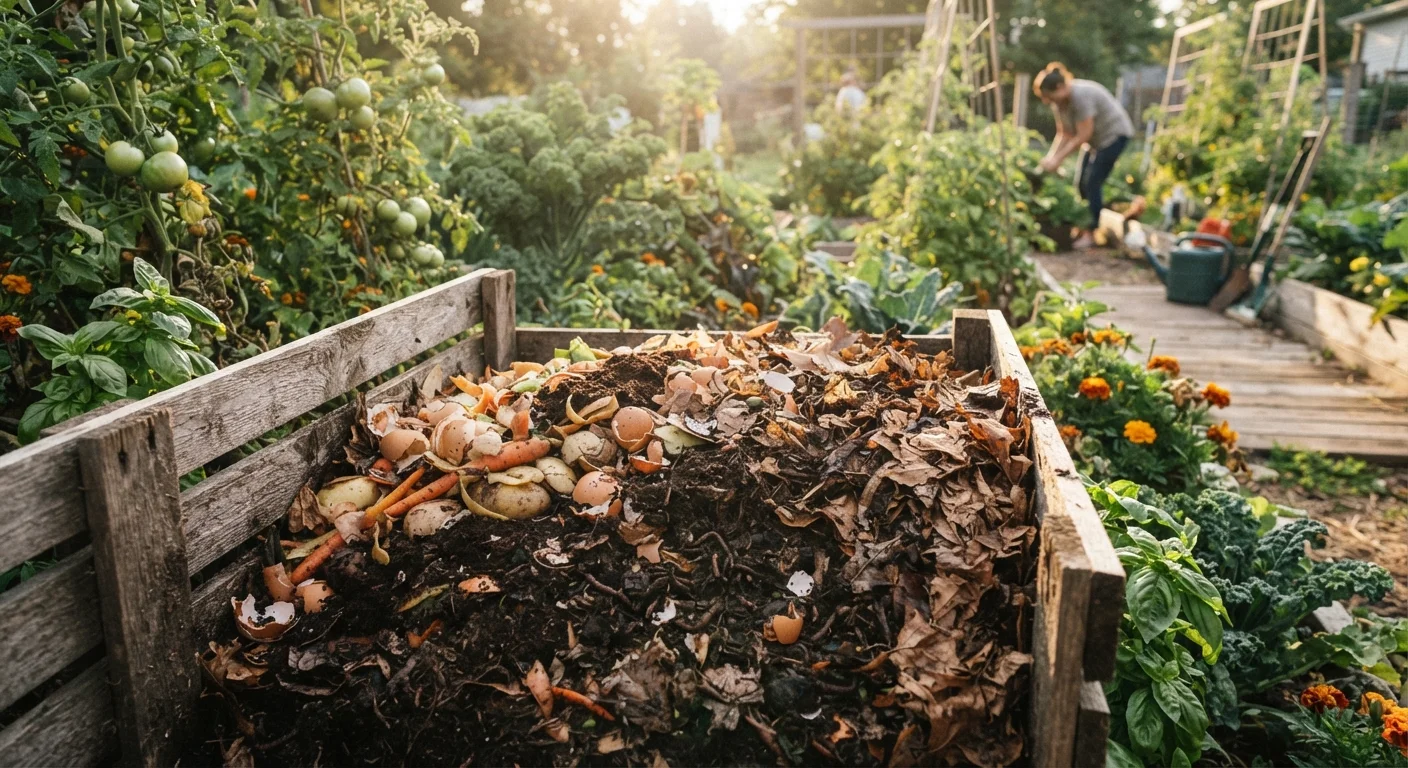
Odor in a compost pile almost always comes from too many nitrogen-rich materials (greens) without enough carbon-rich materials (browns) to balance them, or from a pile that has gone anaerobic because it is too wet and compacted. Adding dry leaves, cardboard, or shredded paper after each food addition, and turning the pile occasionally to let air in, keeps decomposition aerobic. Aerobic decomposition smells like soil, not rot.
Pest problems are typically caused by adding cooked food, meat, or dairy, which are not recommended in standard outdoor bins. A simple lidded bin further reduces any animal interest.
Myth
You need a large yard to compost.
Fact
Composting works in very small spaces, including balconies and under kitchen sinks.
Worm bins (vermicomposting) can sit in a closet, under a sink, or on a balcony. A standard worm bin roughly the size of a plastic storage tote processes several pounds of food scraps per week and produces both finished vermicompost and liquid leachate, both usable as soil amendments.
Bokashi systems, which use fermentation rather than aerobic decomposition, work entirely indoors in a sealed bucket and can handle a wider range of food waste including small amounts of dairy and cooked scraps. Neither method requires outdoor space or a large footprint.
Myth
Composting is complicated and takes a lot of time.
Fact
A basic compost bin requires only a few minutes per week to maintain.
The microbes doing the work do not need supervision. The main tasks are adding materials, maintaining a rough balance of browns and greens, and turning the pile every week or two to speed things along. Turning is optional if you are not in a hurry, a pile left alone will still decompose, just more slowly.
Many families spend more time thinking about composting than actually doing it. Depositing kitchen scraps in a bin takes the same effort as walking them to a trash can.
Myth
Only yard waste and fruit scraps belong in a compost pile.
Fact
A much wider range of household materials breaks down safely in a well-run pile.
Cardboard, newspaper, paper bags, coffee grounds, tea bags (check for plastic seams), eggshells, paper towels, and hair all compost without issue. These are also useful browns or neutrals that help balance wetter kitchen waste.
What to avoid in a standard outdoor bin: meat, fish, bones, cooked food with oils, and dairy. These decompose slowly, can cause odor, and attract wildlife. A bokashi or hot composting system handles them differently, but for a simple backyard bin, the list of exclusions is short.
Myth
Compost is not worth the effort because bagged soil amendments are cheap.
Fact
Finished homemade compost saves money annually and improves soil in ways that many purchased products do not.
Bagged compost and soil conditioners carry a consistent annual cost. A home compost system, once set up, processes material you would otherwise throw away. For families with vegetable gardens or flower beds, replacing even a portion of purchased soil amendments with homemade compost reduces costs over time.
Beyond cost, homemade compost is often richer in microbial diversity than pasteurized bagged products. It also reduces the volume of organic waste going to landfill, where food scraps decompose anaerobically and release methane.
Putting compost to work in your garden
Once you understand what composting does not require, it becomes easier to see what it does deliver. Finished compost improves soil structure, feeds soil microbes, and reduces the need for purchased fertilizers. If you are also building growing beds, see our guide to raised garden beds on a budget for how to put homemade compost to use from day one.
For a clearer picture of how compost differs from mulch and other soil materials, this breakdown of mulch, compost, and ground cover explains when each one is the right choice. Using the wrong material in the wrong spot is a common and avoidable mistake.
30%
Share of household waste that is compostable
The U.S. Environmental Protection Agency estimates that food and yard waste make up roughly 30 percent of what Americans throw away.
2-3 months
Time to finished compost in an active pile
A hot, regularly turned compost pile can produce usable compost in as little as two to three months under typical conditions.
Starting with a simple outdoor bin and one week of consistent food scraps is enough to begin. The pile grows on its own timeline, and the finished product costs nothing beyond the setup.